Seattle Rodent Proofing - Permanent Exclusion for the City's Most Persistent Pest Problem
Green Attic LLC provides rodent proofing for homeowners in Seattle, WA. Licensed contractor (GREENAL785CS) with 4.9 stars from 102+ Google reviews. Free inspections with written, line-item estimates.

Why Seattle Homes Need Rodent Proofing
Seattle's rat problem is structural, not seasonal. The city's density, alley garbage corridors, mature tree canopy providing overhead routes, and the age of its housing stock in South End neighborhoods all combine to make rodent exclusion a necessity rather than a luxury. In Rainier Valley and Beacon Hill, rats routinely travel overhead utility lines from commercial zones into residential attics - a route that no amount of bait stations can permanently interrupt.
The only lasting solution is physical exclusion: sealing every gap from foundation to ridge. Older Seattle bungalows with balloon-frame construction pose a particular challenge because open wall cavities allow rodents to move between floors and enter attics from living-area wall tops. Our inspection maps these pathways and seals them systematically, not just at obvious surface-level entry points.
Our rodent proofing process
Every rodent proofing project in Seattle follows the same structured process.
Free Inspection
We inspect the attic, crawl space, roofline, and foundation for entry points, droppings, nesting, and insulation damage. Documented with photos.
Written Estimate
Line-item pricing for exclusion, cleanup, and any insulation replacement. No pressure, no surprises.
Exclusion & Sealing
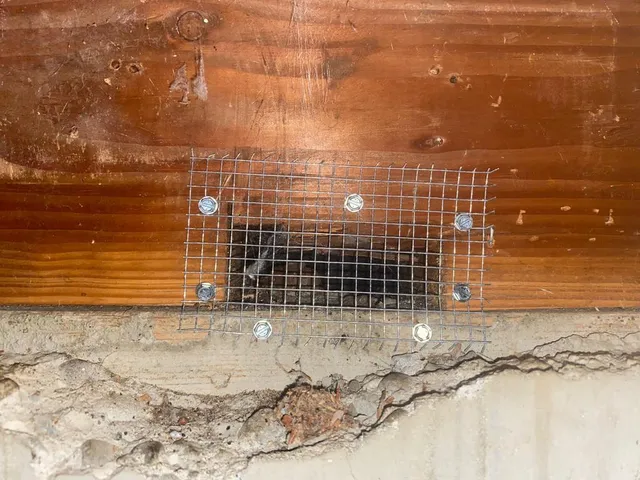
Every entry point sealed with metal mesh, caulk, or sheet metal. Gaps around pipes, vents, soffit joints, and foundation cracks closed permanently.
In Rainier Valley and Georgetown, commercial-zone proximity sustains heavy Norway rat pressure that requires aggressive initial trapping before exclusion.
Contamination Cleanup
Droppings, nesting material, and contaminated insulation removed. Surfaces sanitized with antimicrobial solution.
Balloon-frame Craftsman construction in Beacon Hill means we seal open wall cavities at the top plate, not just visible exterior gaps.
Re-Insulation
New blown-in insulation installed to R-49 code if old insulation was removed due to contamination.
Contaminated insulation from rat activity in Seattle attics is fully removed, the space sanitized, and new R-49 insulation installed.
Follow-Up
We check back to confirm no new activity. Warranty covers re-entry through sealed points.
What's Included
Rodent Proofing Scope of Work
Full Exclusion
Every entry point from foundation to roofline sealed with durable materials
Contamination Cleanup
Droppings, nesting, and damaged insulation removed and disposed of properly
Sanitization
Antimicrobial treatment of affected areas after cleanup
Re-Insulation
New blown-in insulation to R-49 if original insulation was contaminated beyond salvage
Utility Line Entry Point Sealing
Overhead utility line penetrations and conduit entries common along Seattle alley corridors are sealed with metal mesh to block the aerial routes rats use.
Pricing
Rodent Proofing Cost
$800 – $5,000 depending on severity and insulation replacement needs. Every home is different - get a free estimate for exact pricing in Seattle.
Seattle City Light Rebates for Seattle Homeowners
Many insulation and weatherization upgrades qualify for rebates from Seattle City Light and federal tax credits. We handle the paperwork.
Seattle has a well-documented Norway rat population, and the older neighborhoods of Beacon Hill and Rainier Valley are among the most affected in the city. 1920s and 1930s Craftsman bungalows were built with construction gaps that were acceptable by the standards of the day but are essentially open invitations for rats that can compress their bodies through any opening larger than a quarter.
Green Attic's rodent proofing service takes a permanent exclusion approach rather than a trap-and-bait cycle. We perform a full exterior and interior inspection - roofline, soffit joints, foundation vents, utility penetrations, and crawl space access points - and seal every entry point with metal mesh, sheet metal, or caulk that rodents cannot chew through. Deteriorated vent covers, open utility chases, and gaps at rim joists are the most common entry points we find in Seattle's older housing stock.
In Georgetown and South Park, proximity to commercial and light-industrial areas creates sustained rat pressure that makes prevention more important than reaction. Once entry points are sealed, any contaminated insulation is removed, the space is sanitized, and new blown-in insulation is installed to R-49. We do not leave rodent-damaged insulation in place.
What Seattle Customers Say
“We hired Green Attic to reframe a load-bearing wall and insulate our garage conversion. Sadeq walked us through the permit process, his crew kept the site clean, and the final inspection passed first try. Exactly what we needed from a GC.”
RRachel & Dan S.
Seattle · General Contracting
“Rats had been in our attic for months. Green Attic sealed every entry point, removed all the contaminated insulation, sanitized the space, and installed new blown-in. The whole project took two days. Our energy bill dropped $60 the next month.”
DDiana M.
Renton · Rodent Proofing + Attic Cleanup
“Squirrels had chewed through our soffit vents and nested in the insulation. Green Attic sealed every gap with steel mesh, pulled out the contaminated batts, and re-insulated the whole attic. No more scratching sounds at night.”
GGreg & Yuna L.
Bothell · Rodent Proofing
Rodent Proofing FAQ for Seattle
Common questions from Seattle homeowners about rodent proofing.
How do rats get into Seattle Craftsman bungalows?
The most common entry points in pre-war Seattle homes are deteriorated soffit vents (original metal has rusted through), gaps at roof-to-wall junctions where flashing has pulled away, open utility pipe penetrations at the foundation, and cracks in crawl space foundation vents. Balloon-frame construction also means rats entering at grade can travel inside wall cavities directly to the attic without exposure to the exterior. We inspect all of these systematically during our free assessment.
Will bait stations solve my Seattle rat problem long-term?
Bait stations reduce the local rat population temporarily but do not prevent new rats from entering. In high-pressure environments like Rainier Valley and Georgetown - where commercial districts sustain large rat populations nearby - bait-only approaches require continuous maintenance with no permanent resolution. Physical exclusion eliminates the entry points so the question of rat population size becomes irrelevant to your home.
Do I need to replace my insulation after a rat infestation in a South Seattle home?
Rat urine and droppings contaminate blown-in and batt insulation in ways that cannot be cleaned in place. The urine soaks into fiberglass and cellulose, creating persistent odor and a hantavirus exposure risk that requires full removal and disposal. After exclusion sealing and sanitization, we install new blown-in insulation to R-49 code. Most homeowners notice an immediate improvement in both air quality and heating bills after the replacement.
How much does rodent proofing cost in Seattle?
Exclusion-only projects in Seattle typically run $800 to $2,500 depending on the number of entry points and the access complexity of the roofline and crawl space. When contaminated insulation replacement is included, total project cost ranges from $2,500 to $5,000. We provide a line-item written estimate after inspection so you understand exactly what is being done and why each item is priced as it is.
Rodent Proofing in Other Cities
Get a Free Rodent Proofing Estimate in Seattle
We serve Seattle from our Kent office. Free inspection, written estimate, no obligation.
(800) 931-1938
"Norway rats in Beacon Hill and Georgetown travel the overhead utility lines like highways. Bait stations slow them down, but the only permanent fix is sealing every gap from foundation to ridge so they have nowhere left to get in."
Sadeq, Owner of Green Attic
Request Your Free Estimate
No spam. No obligation. We typically respond same day.