
What to Expect During Mold Remediation: A Homeowner's Step-by-Step Guide
Quick Answer
Professional mold remediation follows a predictable process: assessment, testing, containment, removal, source correction, and clearance testing. Most residential projects take 2 to 5 working days and cost between $1,500 and $8,000+ depending on the scope. The single most important thing to understand is that killing or removing mold without fixing the moisture source is a waste of money. It will come back.
Key takeaway: A proper remediation project is not just about removing mold. It is about identifying why the mold grew, fixing that problem, and verifying the results through independent testing.
Step 1: Initial Assessment and Inspection
Every remediation project starts with someone getting eyes on the problem. During the initial assessment, the remediation team is looking at several things at once.
What They’re Evaluating
| Assessment Area | What They Look For |
|---|---|
| Visible mold growth | Location, color, extent, affected materials |
| Moisture readings | Pin and pinless meter readings on wood, drywall, concrete |
| Humidity levels | Ambient relative humidity in affected areas |
| Water source | Active leaks, condensation, grading issues, vapor barrier condition |
| Affected materials | Whether mold is on structural wood, drywall, insulation, or personal belongings |
| HVAC proximity | Whether ductwork or air handlers could be spreading spores |
Moisture readings are critical. A technician will use both pin-type and pinless moisture meters to map out how far the moisture has traveled. Wood moisture content above 20% is the threshold where mold growth becomes very likely, and in Puget Sound crawl spaces, we see readings well above that on a regular basis.
Pro tip: Pay attention to whether the inspector measures moisture in areas beyond the visible mold. Mold often extends further than what you can see, especially behind walls and under insulation.
Step 2: Mold Testing
Testing serves two purposes: it tells you what you’re dealing with before work starts, and it gives you a baseline to compare against after remediation is complete.
Common Testing Methods
| Test Type | What It Measures | When It’s Used |
|---|---|---|
| Air sampling | Spore counts in indoor air vs. outdoor air | Most projects, establishes baseline |
| Surface swabs/tape lifts | Identifies mold species on a specific surface | When species identification matters |
| Bulk samples | Lab analysis of a piece of material (drywall, wood) | When hidden mold is suspected |
Why Independent Testing Matters
This is one of the most important things to understand about the entire process. The company that does the remediation work should not be the same company that tests the results. It is a conflict of interest, plain and simple. A company testing its own work has every incentive to declare the project a success whether it is or not.
Reputable remediation companies will tell you this upfront. At Green Attic, we always recommend that homeowners hire an independent environmental testing firm for both pre- and post-remediation sampling. That independence protects you. If you’re not sure whether your mold situation warrants professional remediation, an independent test is the best place to start.
Independent pre- and post-testing typically costs $400 to $800 combined in the King County area. It is money well spent.
Step 3: Containment
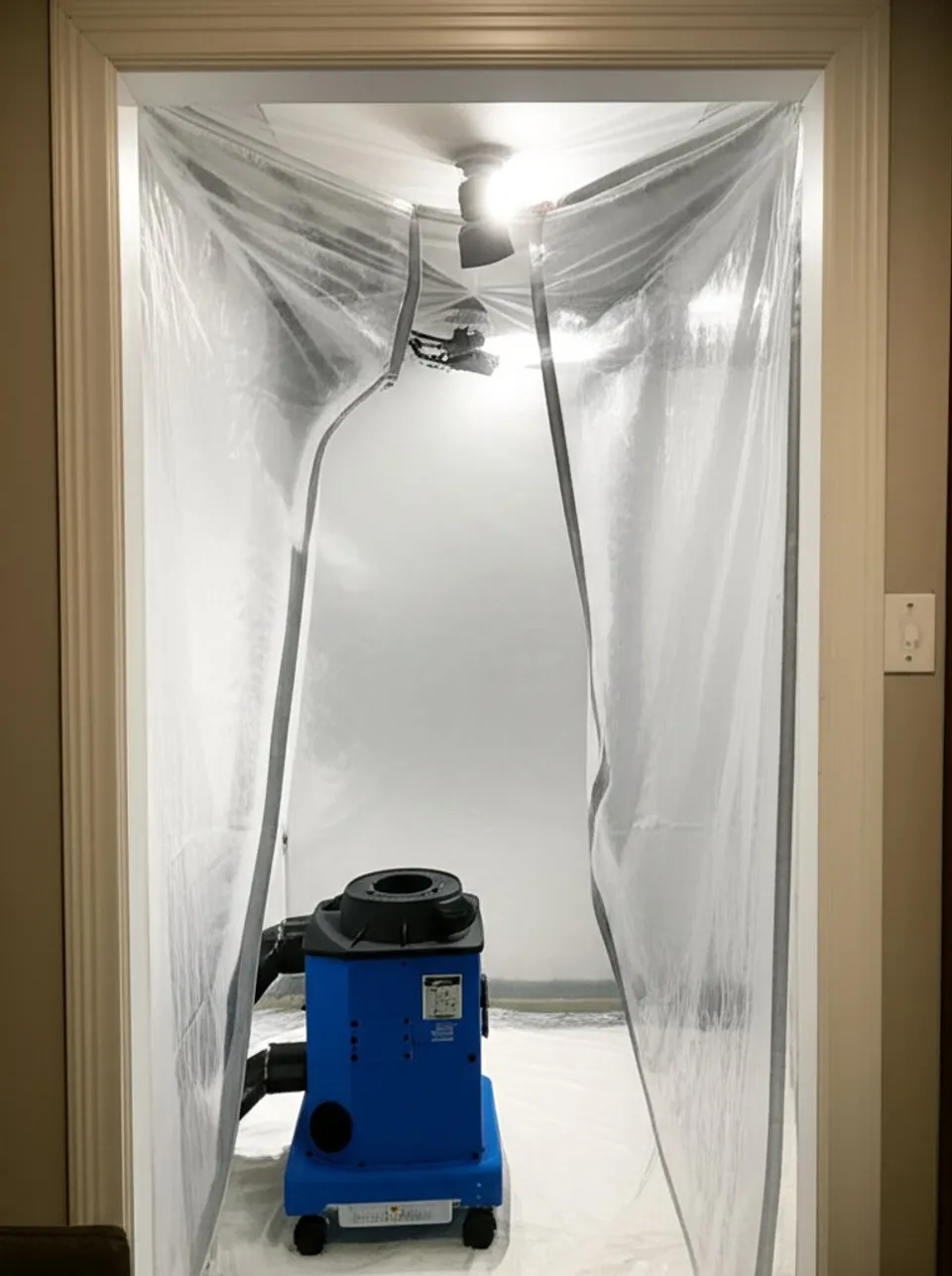
Once the scope of work is established, containment goes up before anyone starts disturbing the mold. This is a critical step that separates professional remediation from someone with a spray bottle and a scrub brush.
How Containment Works
- Plastic sheeting barriers seal off the work area from the rest of the home
- Negative air pressure is established using HEPA-filtered air scrubbers, which pull air into the contained area so spores cannot drift outward
- HVAC systems in the affected area are shut down and vents are sealed to prevent spore distribution through ductwork
- Access points are created using zippered entries so workers can enter and exit without breaking the seal
In crawl space remediation, containment often means sealing the crawl space access point and any floor penetrations (plumbing runs, ductwork gaps) to prevent spores from migrating up into the living space.
What you’ll notice: The remediation crew will tape plastic over doorways and vents. You may hear the constant hum of air scrubbers running. This is normal and exactly what should be happening.
Step 4: Mold Removal
With containment in place, the actual removal work begins. The specific methods depend on the materials affected and the extent of the growth.
Common Removal Methods
| Method | Used For | How It Works |
|---|---|---|
| HEPA vacuuming | All surfaces in work area | Captures loose spores before agitation |
| Media blasting (soda/dry ice) | Structural wood (joists, studs, sill plates) | Removes mold from wood grain without damaging the wood |
| Antimicrobial treatment | Wood and concrete surfaces after cleaning | Kills remaining mold and helps prevent regrowth |
| Material removal | Drywall, insulation, carpet, soft goods | Porous materials that cannot be adequately cleaned are removed and disposed of |
| Wire brushing | Light surface mold on wood | Manual removal for smaller affected areas |
What Gets Removed vs. What Gets Cleaned
This is a common question. Porous materials that have mold growth are almost always removed, not cleaned. That includes drywall, fiberglass insulation, carpet, and cardboard. You cannot adequately remove mold from inside these materials.
Non-porous and semi-porous materials can usually be cleaned in place. Structural wood like floor joists and wall studs, concrete foundation walls, and metal surfaces fall into this category. The wood gets cleaned, treated, and stays in place.
If your crawl space insulation needs to come out during mold remediation, that is actually a common scenario. Fiberglass batts between floor joists are particularly vulnerable to moisture and mold in the Pacific Northwest climate. Many homeowners use remediation as an opportunity to upgrade their crawl space setup with proper vapor barriers and moisture management.
Step 5: Source Correction
This is the step that makes or breaks the entire project. If you skip source correction, the mold will come back. It might take weeks, it might take months, but if the conditions that caused the mold haven’t changed, neither will the outcome.
Common Moisture Sources in Seattle Homes
| Moisture Source | How It’s Corrected |
|---|---|
| Plumbing leak (supply or drain) | Repair or replace the affected plumbing |
| Missing or damaged crawl space vapor barrier | Install 6-mil+ polyethylene, sealed at seams and edges |
| Poor exterior drainage/grading | Regrade soil, extend downspouts, address gutter issues |
| Inadequate ventilation | Add or repair foundation vents, consider a dehumidifier |
| Roof leak | Repair roof, flashing, or penetration seals |
| Condensation on ductwork or pipes | Insulate ducts and pipes to eliminate condensation surfaces |
In the Puget Sound region, the most common culprits are inadequate vapor barriers, poor drainage, and the combination of mild temperatures with high ambient humidity. Seattle’s climate sits in the sweet spot for mold growth — temperatures rarely drop below 35 degrees, and the months of steady rainfall from October through April keep soil saturated around foundations.
Important: Any reputable remediation company will address the moisture source as part of the project scope, or at minimum identify it and provide clear recommendations. If a company offers to remove the mold but says nothing about why it grew, that’s a problem.
Step 6: Clearance Testing
After remediation is complete and the area has dried, an independent testing firm comes back to verify the results. This is the final checkpoint.
What Clearance Testing Involves
- Post-remediation air sampling in the work area and at least one control area (outdoors or an unaffected room)
- Visual inspection to confirm all visible mold has been addressed
- Moisture readings to verify levels are within acceptable range
- Comparison of post-remediation spore counts against pre-remediation baseline and outdoor control
A passing clearance test means indoor spore counts are at or below outdoor ambient levels, no visible mold remains, and moisture readings are within normal range. If the clearance test fails, the remediation company goes back in and addresses whatever was missed, then the area is retested.
This is why independent testing matters. When a third party with no financial stake in the remediation outcome does the testing, you can trust the results. This is the standard we follow on every mold remediation project we do.
Timeline: What to Expect Day by Day
| Project Phase | Typical Duration | Notes |
|---|---|---|
| Initial assessment | 1–2 hours | May be same day or separate from remediation |
| Pre-remediation testing | 1–3 days for lab results | Samples sent to independent lab |
| Containment setup | 2–4 hours | Done on first day of remediation |
| Active remediation | 1–3 days | Depends on scope and affected materials |
| Drying/air scrubbing | 1–2 days | Air scrubbers run continuously |
| Clearance testing | 1–3 days for lab results | Independent third-party testing |
| Total typical timeline | 5–10 business days | From first visit to clearance results |
The actual hands-on work usually takes 2 to 5 days for most residential projects. The rest of the timeline is waiting for lab results on pre- and post-testing.
Cost Ranges for the Seattle Area
| Project Scope | Typical Cost Range |
|---|---|
| Small area (under 50 sq ft, single surface) | $1,500–$4,000 |
| Crawl space remediation (average home) | $3,000–$8,000 |
| Multiple rooms or large structural areas | $5,000–$15,000+ |
| Independent testing (pre + post) | $400–$800 |
| Vapor barrier installation (if needed) | $1,500–$4,000 |
Your homeowners insurance may cover some or all of these costs depending on what caused the mold. We put together a full breakdown of when insurance covers mold remediation in Washington that’s worth reading before you file a claim.
Can You Stay in Your Home?
| Situation | Stay or Leave? |
|---|---|
| Crawl space remediation only | Usually fine to stay |
| One contained room, rest of home unaffected | Usually fine to stay |
| Multiple rooms, especially bedrooms | Consider leaving |
| HVAC system involved in affected area | Leave until system is cleared |
| Household member with asthma, allergies, or immune issues | Leave regardless of project size |
| Strong chemical odors during treatment | Vacate until aired out |
Questions to Ask Before Hiring a Remediation Company
Before you sign anything, ask these questions. The answers will tell you a lot about how the company operates.
- Are you IICRC certified for mold remediation? Look for the AMRT (Applied Microbial Remediation Technician) credential.
- Do you recommend independent third-party testing? If the answer is no, or if they insist on doing testing themselves, walk away.
- Will you address the moisture source, or just remove the mold? A company that only removes mold without fixing the cause is setting you up for a repeat job.
- What does your scope of work include? Get a written scope before work begins. It should cover containment, removal methods, materials to be removed, and any source correction.
- Do you carry liability insurance? Verify their Washington state contractor license and general liability coverage.
- Do you guarantee your work? Ask specifically what happens if the clearance test fails.
If you’ve noticed signs of mold in your crawl space and you’re trying to figure out what comes next, the process above is exactly what a professional remediation project looks like from start to finish.
Get a Professional Assessment
If you suspect mold in your home, whether it’s a musty smell, visible growth, or moisture issues you can’t explain, the smartest first step is a professional assessment. We evaluate mold situations across King County and Snohomish County, identify the moisture source, and give you a clear picture of what needs to happen and what it will cost.
Request your free estimate and we’ll assess your situation, explain the scope, and walk you through your options. No pressure, just straight answers.

"The biggest mistake I see is companies that skip the source correction step. They remove the mold, collect their check, and six months later the homeowner calls because it's back. If you don't fix the moisture problem, you haven't fixed anything."
Sadeq, Owner
"I always recommend that homeowners use an independent testing company, not the same company doing the remediation. We do the work and we stand behind it, but the clearance test should come from someone with no financial interest in the outcome. That's how you know it's really clean."
Sadeq, Owner
Frequently Asked Questions
How long does mold remediation take?
Most residential mold remediation projects take 2 to 5 working days, depending on the size of the affected area and the type of materials involved. Small jobs under 50 square feet can sometimes wrap up in 1 to 2 days. Larger projects involving crawl spaces, multiple rooms, or structural wood may take a full week or more including clearance testing.
Do I need to leave my home during mold remediation?
For small, contained projects in one room or a crawl space, most homeowners can stay in the home. If remediation involves a large portion of your HVAC system, multiple rooms, or significant structural areas, it is safer to stay elsewhere. Anyone with asthma, allergies, or a compromised immune system should leave regardless of project size.
How much does mold remediation cost in the Seattle area?
Costs depend on the scope. Small projects under 50 square feet typically run $1,500 to $4,000. Crawl space mold remediation for an average-sized home ranges from $3,000 to $8,000. Large-scale projects involving multiple areas or structural concerns can cost $5,000 to $15,000 or more. Independent pre- and post-testing adds roughly $400 to $800.
Should the remediation company also do the mold testing?
No. The company that performs the remediation should not be the same one that does the clearance testing afterward. This is a conflict of interest. Reputable remediators, including Green Attic, recommend independent third-party testing to verify the work was done properly. Be cautious of any company that insists on testing their own results.
Will mold come back after remediation?
Mold will return if the underlying moisture problem is not corrected. That is why source correction is a critical step in any remediation project. If the moisture source is identified and fixed, whether that is a plumbing leak, poor drainage, or an inadequate vapor barrier, properly remediated areas should stay clean long-term.
What certifications should a mold remediation company have?
Look for IICRC certification in mold remediation (AMRT), a Washington state contractor license, and proof of liability insurance. Ask whether they follow IICRC S520 standards for mold remediation and whether they recommend independent third-party clearance testing. Any company unwilling to answer these questions directly is a red flag.